House Rewiring Electrician Brisbane
If your Brisbane home still has its original wiring from the 1960s, 70s, or earlier, you're carrying more risk than you probably realise degraded insulation, undersized cable, and a switchboard that was never built to run a modern household.
Signs Your Brisbane Home Needs Rewiring
You don't need to be an electrician to spot the warning signs. These are the ones we see most often on Brisbane rewiring jobs:
Lights that flicker or dim
when another appliance switches on often a sign of loose connections or an overloaded circuit
Circuit breakers or fuses that trip repeatedly
especially under everyday loads like the kettle or air conditioner
Warm, discoloured
or crackling powerpoints and switches
A persistent burning smell
with no obvious source this is not something to wait on; switch off the circuit and call an electrician
Ceramic fuses
instead of circuit breakers, or a switchboard with no RCD safety switches fitted
Visible fabric
or rubber-insulated cable in the roof space or meter box, rather than modern PVC-sheathed cable
Multiple fault-finding
callouts within a year or two — a pattern of faults, rather than a one-off, usually points to wiring that's failing throughout the property rather than at a single point A pre-purchase building and pest inspection flagging old wiring as a defect or safety concern
Why Brisbane Homes Commonly Need Rewiring
Brisbane's older housing stock brings its own set of wiring problems, shaped by both the age of the building and the climate.
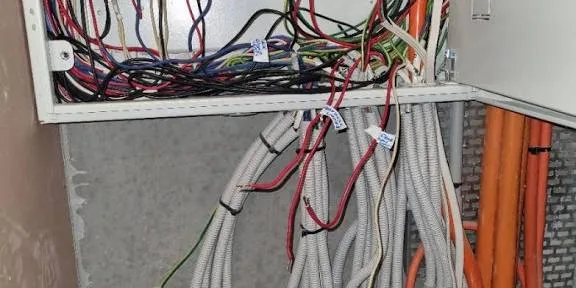
Original wiring in pre-1970s homes.
A large share of Brisbane's Queenslanders, workers' cottages, and post-war brick homes were wired with vulcanised rubber (VIR) or fabric-covered cable. That insulation was never designed to last more than a few decades rubber perishes, cracks, and exposes bare copper conductors inside wall and ceiling cavities, often without any visible sign from outside.
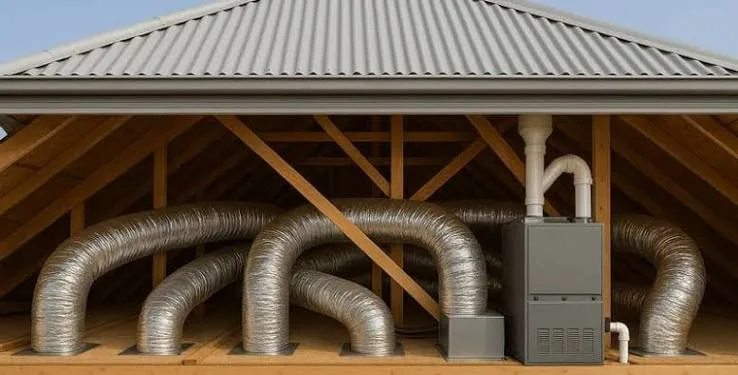
Roof cavity heat.
Brisbane's subtropical climate pushes roof space temperatures well above what southern states experience for much of the year. Sustained heat accelerates the breakdown of old insulation faster than in cooler climates, which is one reason wiring that might still be marginal in Melbourne or Sydney is often already compromised in Brisbane.
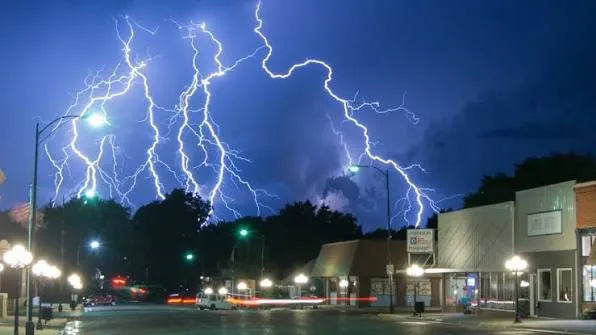
Storm season loading.
Brisbane's storm season (roughly November to March) brings voltage surges and outages that put additional stress on ageing circuits and switchboards. A switchboard without surge protection and modern RCDs is more exposed to this kind of damage.
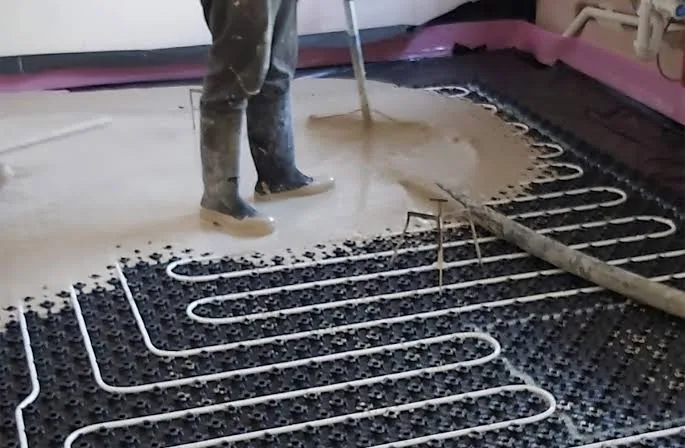
Underfloor and subfloor access on high-set homes.
Traditional Queenslanders and post-war highset homes often have easier subfloor access for cable runs than a slab-on-ground home, which can make certain rewiring jobs more straightforward but stumped, timber-framed construction also means original wiring is frequently routed through spaces that have shifted or been altered over the decades.
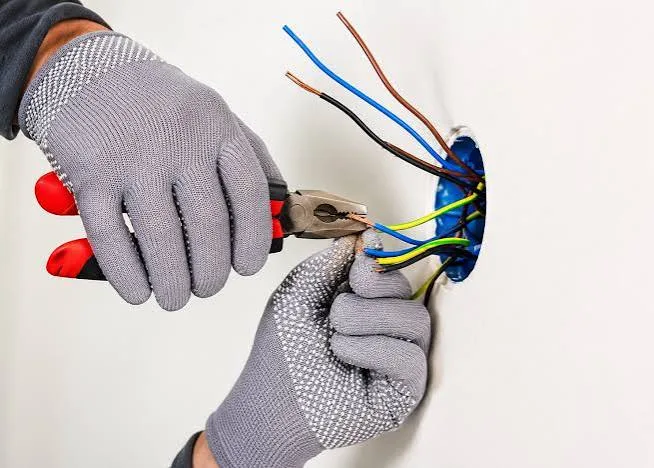
Renovations layered on top of old circuits.
It's common in Brisbane's older suburbs for a home to have been extended two or three times, each renovation adding new circuits without ever removing the original wiring underneath. The result is a switchboard and roof cavity with several eras of cable mixed together some safe, some not, and no clear record of which is which.
Compliance and Safety Standards
All wiring work carried out by EP3 Electrical Services is completed in accordance with:
AS/NZS 3000
(the Australian/New Zealand Wiring Rules), which governs how electrical installations must be designed, installed, and protected
Electrical Safety Act 2002 (Qld)
The Electrical Safety Act 2002 (Qld) and Electrical Safety Regulation 2013, which set the legal safety framework for electrical work in Queensland
Certificate of Electrical Safety
Queensland's Certificate of Electrical Safety requirements, issued on completion of prescribed electrical work
RCD
Current RCD (safety switch) requirements — modern switchboards are fitted with RCD protection across all circuits, not just power circuits, as required under current Queensland regulations
Full Rewire vs Partial Rewire vs Switchboard Upgrade
These three jobs get confused often. Here's how they actually compare.
| Factor | Full House Rewire | Partial Rewire | Switchboard Upgrade Only |
|---|---|---|---|
| Scope | Every circuit, powerpoint, switch, and light in the property | Specific rooms, zones, or circuits identified as faulty or degraded | Switchboard and main protective devices only — existing circuit cable stays in place |
| Best suited to | Homes with original 1960s–70s cable throughout, or homes failing on multiple circuits | Homes with one problem area (e.g. a single wing, an old addition, a kitchen circuit) while the rest tests sound | Homes with reasonable cable condition but an outdated fuse box or no RCD protection |
| Typical disruption | Higher — most rooms affected at some stage of the job | Lower — confined to the affected area | Lowest — work is contained to the switchboard location |
| Wall/ceiling access needed | Yes, throughout | Yes, in the affected zone only | No, in most cases |
| Addresses old cable insulation risk | Yes, fully | Partially — only in rewired zones | No — old cable stays in place |
| Typical duration | Several days, depending on size and access | Often 1–2 days | Usually completed in a day |
Our House Rewiring Process
On-site assessment.
Written scope and quote.
Cable runs and rough-in.
Switchboard replacement.
Fit-off.
Testing and certification.
Testing and handover.
Once repaired, the circuit is tested under load to confirm the fault is actually resolved, not just masked and for commercial clients, we can provide documentation for compliance or insurance records.
Why Choose EP3 House Rewiring in Brisbane
- Licensed and insured electricians. Every rewire is carried out by a qualified tradesperson, not a subcontractor you've never met.
- Straight answers on scope. We tell you when a partial rewire or switchboard upgrade solves the actual problem, rather than defaulting to the biggest job on the quote.
- Local knowledge of Brisbane housing stock. We know what's typically hiding in the roof of a Daisy Hill highset, a Coorparoo Queenslander, or a Chermside brick veneer, which means fewer surprises once the walls are open.
- Compliance documentation on every job. Including the required testing and certification, not as an afterthought.
- Clean, communicative worksites. Dust and debris are managed and cleared, and you're kept in the loop on progress, especially on multi-day rewires in an occupied home.
- Coverage across Brisbane and surrounds. Including Brisbane's Northside and Southside, Logan, Redlands, Ipswich, and the Gold Coast.