

You flick the kettle on and the kitchen light dims for a second. Or maybe it’s just one downlight in the hallway that’s been flickering on and off for a week, no matter how many times you’ve tightened the bulb. Flickering lights are one of those problems that’s easy to ignore at first, until it starts happening more often, or in more than one room.
Sometimes flickering is nothing more than a loose bulb or a cheap dimmer switch. Other times, it’s an early sign of a wiring or connection problem that’s worth having checked out. The tricky part is knowing which is which.
This guide walks through the most common causes of flickering lights in Brisbane homes, what separates a minor nuisance from a genuine electrical fault, and when it’s time to stop guessing and get a licensed electrician to take a look.
Is a Flickering Light Always a Problem?
Not necessarily. A single bulb flickering can be as simple as a loose connection in the fitting or a bulb that’s on its way out. But flickering that affects several lights, happens whenever an appliance switches on, or keeps recurring after you’ve replaced the bulb usually points to something happening further back in the circuit or switchboard.
The safest approach is to treat flickering as a symptom rather than a diagnosis. It tells you something isn’t quite right, but it doesn’t tell you exactly what, which is why persistent or widespread flickering is worth having assessed rather than lived with.
Flickering Lights vs a Genuine Electrical Fault
Situation | Likely Cause | Action |
One light flickers, bulb is old | Loose or failing bulb | Replace the bulb, monitor |
Flickering when dimmer is used | Dimmer/LED compatibility | Check dimmer is LED-compatible |
Flickering when an appliance starts | Normal voltage dip or overloaded circuit | Monitor; get assessed if frequent or severe |
Flickering with a warm switch or power point | Possible loose wiring connection | Stop using and arrange an inspection |
Flickering with a burning smell or buzzing | Potential serious electrical fault | Stop use and contact a licensed electrician immediately |
Whole house flickers regularly | Switchboard or supply issue | Arrange a professional inspection |
Common Causes of Flickering Lights
1. A Loose or Faulty Bulb
The most common and least serious cause. If a bulb isn't screwed in firmly, or the contact point in the fitting has corroded slightly, the connection can be interrupted just enough to cause flickering. This usually affects one light only.
2. A Faulty Light Switch
Worn-out switches, particularly older toggle or dimmer switches, can develop weak internal contacts. This often shows up as flickering that changes when you jiggle the switch or as the light warming up.
3. Loose Wiring Connections
Wiring connections can loosen over time, especially in older homes or where DIY work has been carried out previously. A loose connection creates resistance, which can cause flickering, warm switch plates, or in more serious cases, overheating. This is one of the more important causes to rule out, because loose connections are a recognised fire risk if left unaddressed.
4. Voltage Fluctuations
Large appliances such as air conditioners, pool pumps, or ovens draw a significant amount of power when they start up. This can cause a brief, noticeable dip in voltage, which shows up as lights dimming or flickering for a second before returning to normal. Occasional flickering tied to a specific appliance is common, but frequent or severe dimming may indicate the circuit is overloaded or undersized for what's connected to it.
5. Overloaded Circuits
If too many appliances or lights are running on the same circuit, the load can cause voltage to fluctuate, leading to flickering. This is more common in older Brisbane homes that weren't wired for the number of appliances typically used today.
6. Dimmer Switch Compatibility Issues
Not every dimmer switch is compatible with every type of globe, particularly LEDs. Using an incompatible dimmer is one of the most common causes of flickering in homes that have upgraded to LED lighting.
7. A Problem at the Switchboard
Less commonly, flickering across multiple circuits or the whole house can point to an issue at the switchboard itself, such as a loose main connection. This is a more serious cause and generally requires a licensed electrician to inspect the switchboard safely.
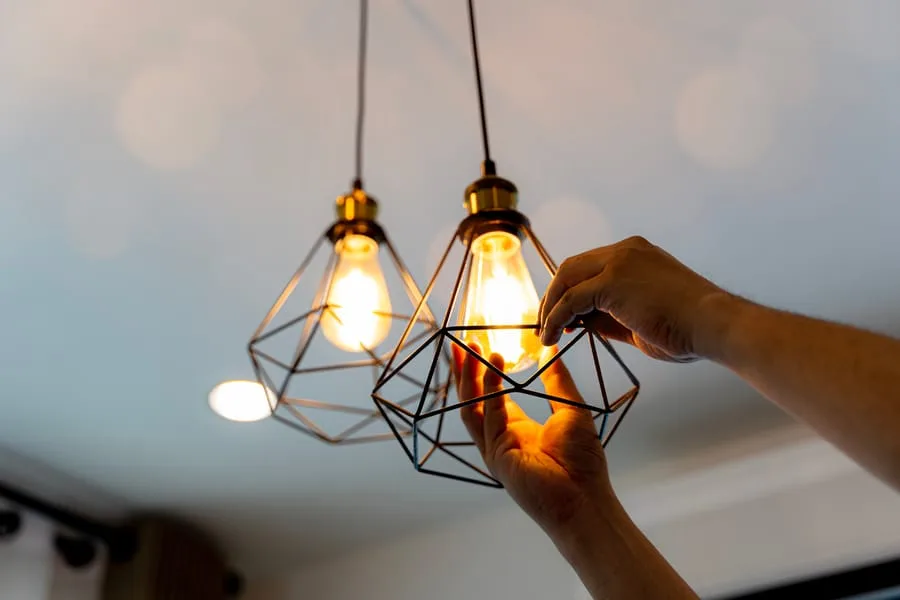
Why LED Lights Flicker Differently to Older Bulbs
LED globes work differently to the incandescent and halogen bulbs many Brisbane homes were originally wired for. LEDs are more sensitive to voltage fluctuations and to the type of dimmer switch they’re paired with. This means:
- An LED can flicker even when an old halogen bulb in the same fitting never did
- Cheaper or non-dimmable LEDs used on a dimmer circuit are a common cause of flicker
- Flickering that starts right after switching to LED globes often points to a compatibility issue rather than a wiring fault
If you’ve recently upgraded to LED lighting and flickering started around the same time, mismatched dimmer switches are worth checking before assuming there’s a deeper electrical problem.
One Light Flickering vs the Whole House
The pattern of flickering gives useful clues:
- A single light flickers: usually the bulb, the fitting, or the switch for that light
- Several lights on one circuit flicker together: often points to that specific circuit, such as a loose connection or overload
- Lights throughout the house flicker, especially with appliances: may indicate a supply issue, an overloaded switchboard, or in some cases a fault with the incoming power connection
Widespread flickering, particularly if it coincides with buzzing sounds, warm power points, or a burning smell, should be treated as a priority and not left for “later.”
When Flickering Lights Are an Emergency
Most flickering is a minor nuisance, but stop using the affected circuit and contact a licensed electrician if flickering is accompanied by any of the following:
- A burning smell near a switch, power point, or the switchboard
- Discolouration or scorch marks around a switch or fitting
- A switch or power point that feels warm or hot to touch
- Crackling, buzzing, or popping sounds
- Sparking when a switch is used
These signs can indicate a fault that presents a fire or shock risk. Don’t attempt to inspect or repair the wiring yourself. If there’s an immediate danger, such as visible fire or smoke, contact emergency services first.
What an Electrician Checks When Diagnosing Flickering Lights
A proper fault-finding process usually involves:
- Identifying the pattern – which lights, which circuits, and when it happens
- Checking connections – at the switch, the fitting, and the switchboard
- Testing the circuit – to rule out overloading or a faulty component
- Inspecting the switchboard – particularly for older homes or where multiple circuits are affected
- Confirming dimmer and globe compatibility – for flickering linked to LED lighting
This process helps distinguish between a simple fix, like a bulb or switch replacement, and a wiring issue that needs to be addressed properly rather than masked.
Preventing Flickering Lights in the Future
- Use LED globes and dimmer switches that are confirmed compatible with each other
- Avoid overloading a single circuit with too many high-draw appliances
- Have your switchboard assessed if your home is older or hasn’t been checked in some time
- Don’t ignore flickering that keeps returning after a bulb replacement
- Arrange periodic electrical inspections, particularly for homes over 20 years old
Preventative checks are generally far less disruptive than dealing with a fault that’s been left to develop over time.
A Note on Safety
Never open a switchboard, remove a switch plate, or attempt to inspect wiring yourself. Electrical fault finding involves working around live components, and diagnosing the wrong cause can leave the actual fault unresolved. If your lights are flickering persistently, or you’ve noticed any warning signs above, it’s worth having it looked at properly rather than guessing.
If you’re in Brisbane, Brisbane Northside, or the surrounding suburbs and your lights have been flickering more than they should, EP3 Electrical Services can carry out proper electrical fault finding to identify the cause and fix it safely.
Frequently Asked Questions
Why are my lights flickering all of a sudden?
Is flickering lights dangerous?
Why does only one light flicker and not the others?
Can a faulty appliance cause lights to flicker?
Why do my LED lights flicker but my old bulbs didn't?
Should I call an electrician for flickering lights?
Can flickering lights indicate a switchboard problem?
How much does it cost to fix flickering lights in Brisbane?

admin
Author at EP3 Electrical Services.